Selecting the correct culinary hardware is a strategic decision that dictates your kitchen’s operational velocity and the quality of your results. In the ongoing debate of Stainless Steel vs. Nonstick Cookware, the optimal choice is determined by your thermal management habits, the specific proteins you prepare, and your required maintenance cycle. Understanding the nuances of Stainless Steel vs Nonstick Cookware can significantly enhance your cooking experience.
While both architectures are staples of the modern kitchen, they operate on different principles of physics. Stainless steel relies on molecular browning (the Maillard reaction), while nonstick utilizes low-friction polymers for effortless food release. This guide provides a technical audit of both systems to help you engineer a high-performance cookware inventory.
When considering Stainless Steel vs Nonstick Cookware, it’s essential to weigh the benefits of each type in relation to your cooking needs.
1. Quick Verdict: Strategic Procurement
To determine which metallurgy belongs in your primary “workhorse” position, evaluate your cooking style against these technical benchmarks:
In the context of Stainless Steel vs Nonstick Cookware, evaluating your personal cooking style can guide you toward the right choice.
Prioritize Stainless Steel if:
-
You require High-Heat Stability for searing, deglazing, and “fond” development.
-
You seek a “Buy-it-Once” Asset with a near-infinite lifespan and zero coatings to fail.
-
You prefer Chemically Inert Surfaces that are 100% free of synthetic polymers.
-
You need Induction Compatibility and oven-safety up to 315°C (600°F).
Prioritize Nonstick if:
For those new to cooking, the Stainless Steel vs Nonstick Cookware debate might seem overwhelming, but understanding the core differences is key.
-
You frequently execute Low-Temperature Proteins like eggs, crepes, or delicate white fish.
-
You require Minimal Lipid Usage (cooking with little to no oil or butter).
-
You prioritize Sanitation Velocity and near-instant cleanup.
-
You are a Beginner Cook looking for a forgiving surface that prevents adhesion errors.
2. Technical Audit: What is Stainless Steel Cookware?
In any kitchen, the Stainless Steel vs Nonstick Cookware choice can affect not only your cooking results but also your overall kitchen efficiency.
Professional-grade stainless steel is an alloy of iron, chromium, and nickel (typically 18/10 surgical grade). Because steel is a poor thermal conductor on its own, high-performance pans on Amazon utilize Multi-Clad Engineering.
-
The Architecture: A heat-conducting core of Aluminum or Copper is “sandwiched” between layers of stainless steel. In “Fully Clad” models, this core extends from the base all the way to the rim.
-
Tri-Ply vs. 5-Ply: Tri-ply (3 layers) is the industry standard for responsiveness. 5-ply (5 layers) offers increased thermal mass and superior warp resistance for high-output environments.
Operational Benefits of Stainless Steel
-
Mechanical Durability: It is impervious to metal utensils, abrasive scouring, and extreme thermal cycling.
-
Maillard Mastery: The micro-texture of the steel allows proteins to “grip” slightly, creating the caramelized bits (fond) essential for professional pan sauces.
-
Non-Reactive Integrity: It will not leach or react with acidic ingredients like tomatoes, wine, or citrus.
-
Lifetime ROI: A high-quality stainless set from brands like All-Clad or Tramontina is a generational investment that outlasts dozens of nonstick replacements.
3. Comparison Matrix: Performance Benchmarks
A strong understanding of Stainless Steel vs Nonstick Cookware will empower you to make informed purchasing decisions.
| Feature | Stainless Steel | Nonstick (PTFE/Ceramic) |
| Thermal Ceiling | High (600°F+) | Low-Medium (450°F–500°F) |
| Food Release | Requires technique (preheating) | Effortless (Instant) |
| Lifespan | 20+ Years / Lifetime | 3–5 Years (Consumable) |
| Utensil Safety | Metal-Safe | Silicone/Wood Only |
| Best Use Case | Steaks, Pan Sauces, Braising | Eggs, Fish, Pancakes |
4. The “Hybrid” Strategy for 2026
Most high-functioning kitchens do not choose one over the other; they deploy a Strategic Hybrid Inventory.
-
The Standard Configuration: Invest in a comprehensive Stainless Steel Multi-Clad Set for your pots, saucepans, and primary sauté pans. Supplement this with one or two High-Density Nonstick Skillets (8-inch and 10-inch) reserved specifically for eggs and delicate tasks.
By matching the metallurgy to the task, you maximize the lifespan of your nonstick coatings while enjoying the professional-grade performance and durability of stainless steel.
Are you ready to invest in a “buy-it-once” stainless steel foundation, or are you looking for a modern, PFAS-free nonstick set for daily convenience?
Best Stainless Steel Cookware on Amazon

Cuisinart Multiclad Pro Cookware Set
Why It’s Popular
This is one of the most recommended stainless steel cookware sets for home kitchens.
Key features:
-
Triple-ply construction
-
Aluminum core for even heating
-
Stainless steel cooking surface
-
Oven safe up to 550°F
Pros
-
Excellent heat control
-
Durable construction
-
Professional cooking performance
-
Dishwasher safe
Cons
-
Food can stick if technique is wrong
-
Slight learning curve
Best For
-
Serious home cooks
-
High heat cooking
-
Long-term investment cookware
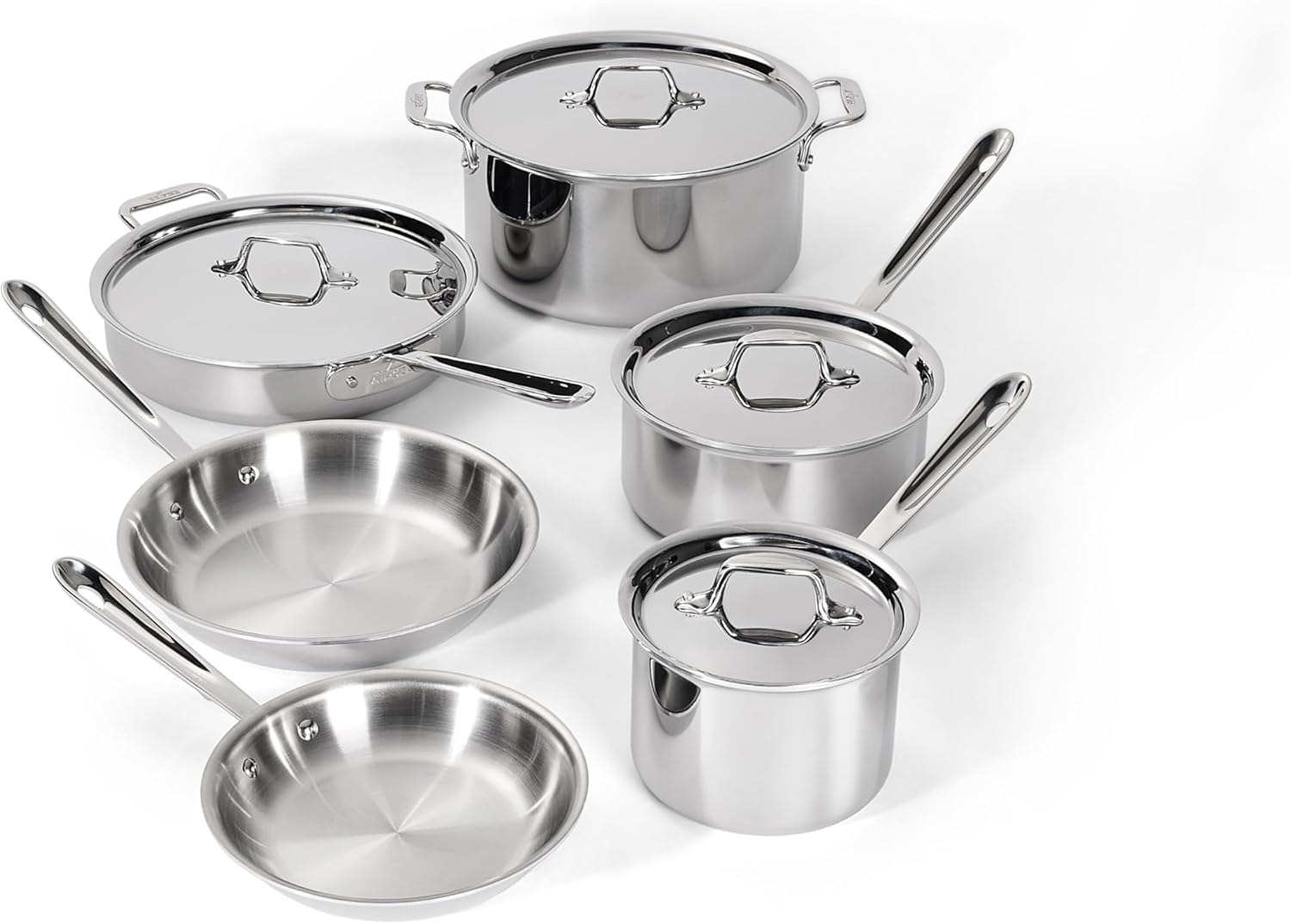
All-Clad D3 Stainless Steel Cookware Set
Why Many Chefs Recommend It
All-Clad cookware is famous for its durability and even heating. The D3 series uses bonded layers of stainless steel and aluminum.
Features include:
-
Made in the USA
-
Warp-resistant construction
-
Induction compatible
-
Oven safe to 600°F
Pros
-
Professional quality
-
Even heat distribution
-
Extremely durable
Cons
-
Expensive
-
Heavier than nonstick cookware
Best For
-
Experienced cooks
-
Long-term kitchen investment
What Is Nonstick Cookware?
Nonstick cookware uses a coated cooking surface designed to prevent food from sticking. This coating allows you to cook with less oil and makes cleanup much easier.
Most nonstick cookware today uses PTFE-based coatings or ceramic nonstick surfaces.
Benefits of Nonstick Cookware
Easy cooking
Eggs, pancakes, and fish release easily.
Less oil required
Helpful for low-fat cooking.
Quick cleanup
Food rarely sticks to the surface.
Beginner friendly
Very forgiving compared to stainless steel.
Best Nonstick Cookware on Amazon

T-fal Ultimate Hard Anodized Nonstick Cookware Set
Why It’s a Top Seller
This cookware set is widely recommended for everyday home cooking.
Key features:
-
Hard-anodized aluminum body
-
Durable nonstick coating
-
Thermo-Spot heat indicator
-
Oven safe up to 400°F
Pros
-
Affordable
-
Excellent nonstick performance
-
Easy cleaning
-
Comfortable handles
Cons
-
Coating eventually wears out
-
Not ideal for high-heat searing
Best For
-
Everyday cooking
-
Eggs and pancakes
-
Families

GreenLife Soft Grip Ceramic Nonstick Cookware Set
Why People Choose It
Ceramic cookware has become popular among shoppers who want a coating without traditional PTFE.
Features include:
-
Ceramic nonstick coating
-
Lightweight aluminum body
-
Soft grip handles
-
Dishwasher safe
Pros
-
Attractive colors
-
Easy cooking
-
Lightweight
Cons
-
Shorter lifespan than stainless steel
-
Coating wears faster than premium brands
Best For
-
Casual cooks
-
Small kitchens
-
Budget shoppers
3. Comparative Performance: Structural & Thermal Benchmarks
When evaluating Stainless Steel vs. Nonstick Cookware, the decision should be driven by the specific “thermal tasks” you perform most frequently. Each material operates within a distinct performance envelope.
The Performance Matrix
| Feature | Winner: Stainless Steel | Winner: Nonstick |
| Searing & Maillard Reaction | High-Heat Stability: Essential for developing “fond” and crust on proteins. | Lower Threshold: High heat can degrade the coating before a deep sear is achieved. |
| Delicate Food Release | Technical: Requires precise preheating and oiling to prevent adhesion. | Effortless: The gold standard for eggs, crepes, and flaky white fish. |
| Thermal Ceiling | Extreme: Safe for high-output burners and ovens up to 315°C (600°F). | Limited: Performance drops if heated above 230°C–260°C (450°F–500°F). |
| Sanitation Velocity | Mechanical: May require soaking or abrasive scrubbing for carbonized bits. | Instant: Usually requires only a soft sponge and mild detergent. |
| Asset Longevity | Decades: A near-infinite lifespan with zero chemical coatings to fail. | Consumable: Coatings typically have a 3–5 year functional window. |
🛡️ Health & Safety Protocol: Material Integrity
In 2026, the primary concern for home cooks is chemical stability. Both materials are verified safe when used within their engineered parameters.
-
Stainless Steel: Completely inert and non-reactive with acidic ingredients (tomatoes, wine). It contains no synthetic polymers. Note: Those with extreme nickel sensitivities should opt for “nickel-free” 18/0 stainless steel.
-
Modern Nonstick: Reputable brands on Amazon are now PFOA-free. To maintain safety, avoid “dry-heating” an empty pan on high and retire any unit once the coating begins to flake or show deep scoring.
💰 The Financial ROI: Initial vs. Lifecycle Cost
While a high-quality nonstick set is more accessible initially, stainless steel represents a superior Long-Term Capital Investment.
| Cookware Tier | Nonstick (PTFE/Ceramic) | Multi-Clad Stainless Steel |
| Entry Level | $50–$150 | $150–$250 |
| Professional Grade | $150–$300 | $300–$800+ |
| Replacement Cycle | Every 3–5 Years | Generational (20+ Years) |
👨🍳 The “Hybrid” Inventory: A Strategic Setup
By adopting a thoughtful approach to the Stainless Steel vs Nonstick Cookware discussion, you can elevate your culinary skills.
Professional chefs rarely limit themselves to one metallurgy. The most efficient kitchen utilizes a Combined Hardware Strategy to maximize the strengths of both materials:
-
The Foundation (Stainless Steel): Deploy a 10-inch or 12-inch Multi-Clad Skillet for steaks, chicken, and pan sauces. Use stainless steel for all Saucepans and Stockpots.
Ultimately, whether you choose stainless steel or nonstick cookware, the Stainless Steel vs Nonstick Cookware decision will shape your cooking habits and outcomes.
-
The Specialist (Nonstick): Reserve a dedicated 8-inch or 10-inch Hard-Anodized Skillet strictly for eggs, omelets, and delicate seafood.
🛠️ Operational Tips for Peak Performance
For Stainless Steel Mastery
-
The “Water Bead” Test: Preheat the dry pan on medium. Flick a drop of water onto it; if it “dances” like a bead of mercury, the pan is thermally ready for oil.
-
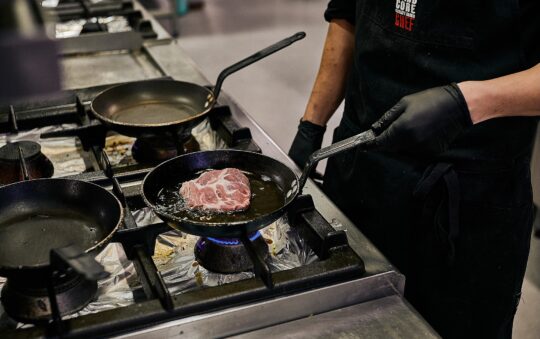
The “Natural Release” Rule: If meat feels stuck, wait. It will naturally detach once the sear is complete.
For Nonstick Longevity
-
The “No-Metal” Mandate: Use only silicone or wood. Even a single micro-scratch can accelerate coating failure.
-
Manual Sanitation: Avoid the dishwasher. Harsh detergents act as abrasives that “sand” down the nonstick surface over time.
Final Verdict: Which Belongs in Your Kitchen?
The debate of Stainless Steel vs. Nonstick isn’t about which is “better,” but which is more appropriate for the task at hand.
-
Invest in Stainless Steel if you prioritize professional browning, high-heat durability, and a “buy-it-once” asset.
-
Invest in Nonstick if you prioritize effortless cleanup and a forgiving surface for breakfast prep.
Are you ready to upgrade to a lifetime stainless steel skillet for your primary searing, or are you looking for a high-performance ceramic nonstick for your morning routine?