In recent years, the kitchen has evolved from a simple cooking space to the heart of the home — a place where health, sustainability, and style all come into play. As more people embrace cleaner living, the focus on safe, eco-conscious materials has intensified, especially when it comes to what we cook with. If you’re striving to create a healthier home, choosing non-toxic kitchen utensils is an essential step in that journey.
This in-depth 2500-word article will explore everything you need to know about non-toxic kitchen utensils. From understanding the risks of traditional materials to discovering top-rated safe alternatives, this guide will help you make informed, health-conscious decisions for your family and home.
Table of Contents
-
What Are Non-Toxic Kitchen Utensils?
-
Why Avoid Toxic Materials in the Kitchen?
-
Materials to Avoid in Kitchen Utensils
-
Best Non-Toxic Kitchen Utensil Materials
-
Top 10 Non-Toxic Kitchen Utensils (Product Reviews)
-
Non-Toxic Utensil Sets for the Whole Kitchen
-
How to Care for Non-Toxic Utensils
-
Final Thoughts: Healthy Cooking Starts with Healthy Tools
1. What Are Non-Toxic Kitchen Utensils?
Non-toxic kitchen utensils are cooking tools made from materials that do not leach harmful chemicals into your food, even when exposed to heat, acids, or moisture. These utensils are typically free from:
-
BPA
-
Phthalates
-
Lead
-
PVC
-
PFAS (often used in Teflon)
-
Melamine
They also avoid coatings or finishes that degrade over time and contaminate food, making them safer and longer-lasting alternatives for everyday cooking.
2. Why Avoid Toxic Materials in the Kitchen?
Kitchen utensils come into direct contact with food during preparation and cooking. Heat, friction, and acidic ingredients can cause toxic components to leach into food — especially when using low-quality or outdated materials.
Potential health risks include:
-
Hormonal disruption (from BPA and phthalates)
-
Reproductive and developmental toxicity (lead, cadmium)
-
Kidney and liver damage (from persistent chemicals like PFAS)
-
Increased risk of chronic diseases from long-term exposure
Switching to non-toxic kitchen utensils is a simple, proactive step toward better health for you and your family.
3. Materials to Avoid in Kitchen Utensils
When shopping for safe kitchen tools, avoid these materials unless they’re specifically labeled as safe and toxin-free:
1. Plastic (with BPA or unknown composition)
-
Breaks down with heat
-
Can leach endocrine-disrupting chemicals
2. Melamine
-
Often found in colorful plastic utensils
-
Can release formaldehyde when heated
3. Teflon-Coated Utensils
-
PFAS used in the coating can degrade and become toxic over time
4. Aluminum (uncoated or un-anodized)
-
Can leach into acidic foods
-
Potential link to neurotoxicity
5. PVC (Polyvinyl Chloride)
-
Common in cheap plastic tools
-
Often contains phthalates
4. Best Non-Toxic Kitchen Utensil Materials
✅ Silicone (Food-Grade, BPA-Free)
-
Heat-resistant (usually up to 450°F+)
-
Non-reactive and flexible
-
Safe for nonstick cookware
✅ Stainless Steel (18/8 or 18/10 grade)
-
Non-corrosive, non-reactive
-
Incredibly durable
-
Easy to clean
✅ Bamboo
-
Naturally antimicrobial
-
Biodegradable and renewable
-
Lightweight and gentle on cookware
✅ Wood (Maple, Beechwood, Olive Wood)
-
Classic and durable
-
Safe for all surfaces
-
Must be oiled and cared for
✅ Ceramic-Coated
-
Nonstick and non-toxic alternative to Teflon
-
Free from PFAS, PFOA, and lead
5. Top 10 Non-Toxic Kitchen Utensils (Individual Reviews)
1. GIR Premium Silicone Spatula

Material: BPA-Free Silicone
Price: $12–$18
Why It’s Great: Heat-resistant up to 550°F, seamless design (no bacteria-trapping seams), dishwasher-safe.
Pros:
-
Durable yet flexible
-
Stain-resistant
-
Comes in multiple sizes and colors
Cons:
-
Slightly heavier than plastic spatulas
Verdict: A premium, versatile tool for both baking and cooking.
2. OXO Good Grips Stainless Steel Tongs

Material: 18/8 Stainless Steel & Silicone Tips
Price: $14–$18
Why It’s Great: Locks closed for storage, non-slip grip, and heat-resistant silicone tips for safety on nonstick pans.
Pros:
-
High-grade stainless steel
-
Dishwasher-safe
-
Gentle on cookware
Cons:
-
Silicone tips may wear over years of use
Verdict: A perfect blend of control and safety in a versatile tool.
3. Riveira Bamboo Wooden Spoons for Cooking
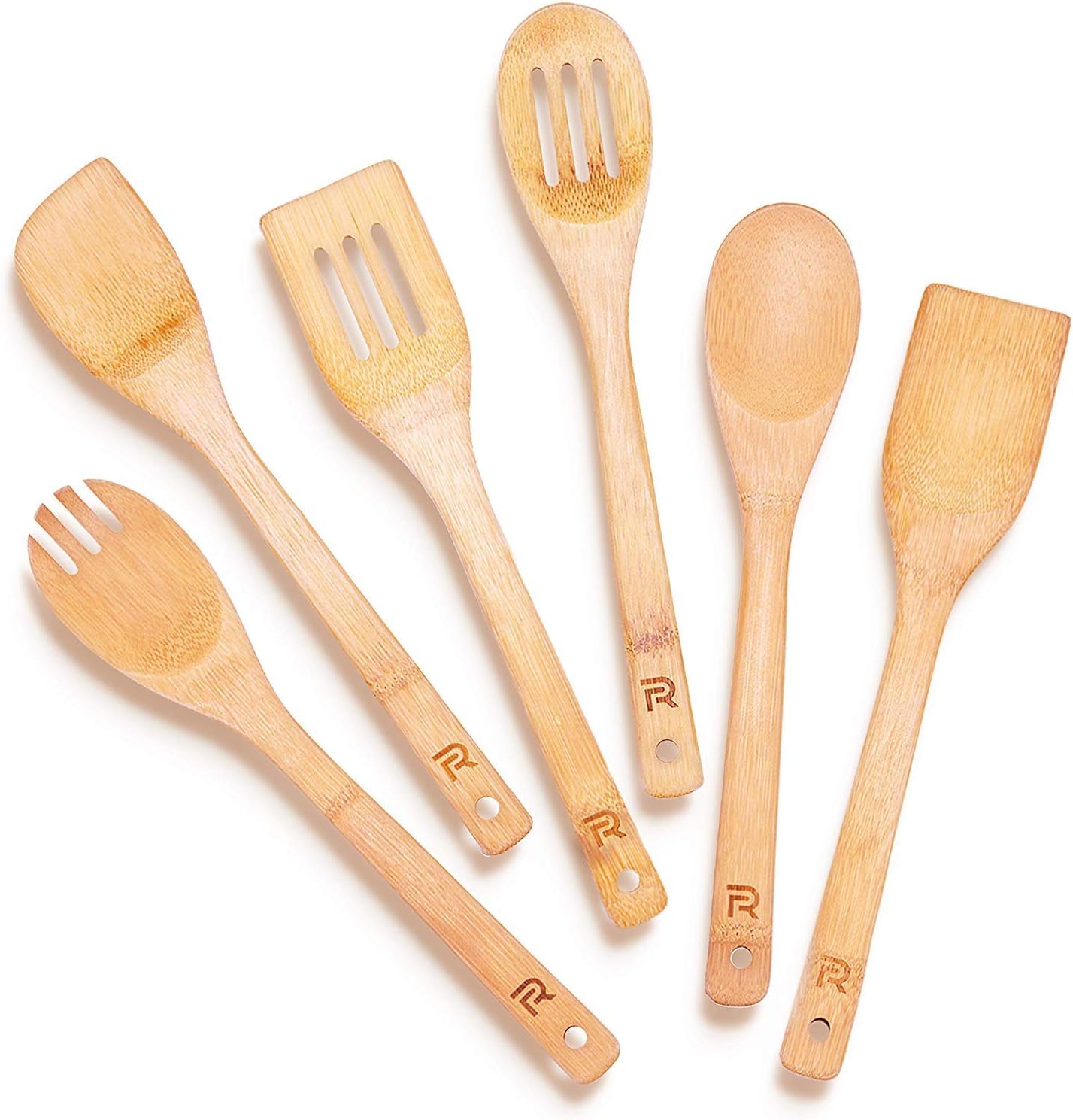
Material: Organic Bamboo
Price: $10–$25 (set of 3–6)
Why It’s Great: Offers a limited lifetime manufacturer’s warranty, so if you’re not 100% happy with your kitchen spoons, simply send it back.
Pros:
-
Lightweight and smooth
-
Won’t scratch pans
-
Sustainably made
Cons:
-
Not dishwasher safe
-
Requires oiling to avoid drying out
Verdict: An eco-friendly, affordable set for everyday use.
4. RJ Legend Stainless Steel Kitchen Accessory Utensils

Material: Stainless steel core, BPA-free soft-touch handle
Price: $16
Why It’s Great: Sleek and ergonomic design with a weighted, balanced handle.
Pros:
-
Modern design
-
Heat-resistant handle
-
Built to last
Cons:
-
On the expensive side for a single utensil
Verdict: A designer touch for a healthier kitchen.
5. Le Creuset Craft Silicone Spoon Spatula

Material: BPA-Free Silicone with Wooden Handle
Price: $15–$20
Why It’s Great: Combines vintage wood with high-heat silicone for safe cooking and baking.
Pros:
-
Heat-resistant up to 480°F
-
Dishwasher-safe head
-
Removable head for deep cleaning
Cons:
-
Handle must be hand washed
Verdict: Classic look, modern performance.
6. Zulay Kitchen Premium Stainless Steel Metal Spatula

Material: Premium Quality Stainless Steel
Price: $15–$20
Why It’s Great: Lightweight and easy to clean.
Pros:
-
Non-reactive metal
-
Great for flipping and sautéing
-
Lifetime guarantee
Cons:
-
Not ideal for nonstick pans
Verdict: A great all-purpose tool.
7. Eddeas Silicone Whisk

Material: Stainless Steel + BPA-Free Silicone
Price: $9–$15
Why It’s Great: Nonstick-friendly and toxin-free.
Pros:
-
Heat-resistant silicone
-
Dishwasher safe
-
BPA-free
Cons:
-
Less durable than metal whisks
Verdict: Safe for any cookware and budget-friendly.
8. Earlywood Wooden Utensil Set

Material: Sustainably-sourced hardwoods (maple, jatoba, bloodwood)
Price: $60–$100
Why It’s Great: Handcrafted, heirloom-quality wooden utensils with a luxurious feel.
Pros:
-
Beautiful grain and color
-
Ultra-durable and safe
-
Handmade in the USA
Cons:
-
Requires regular oiling
-
Premium price tag
Verdict: A long-term, non-toxic investment for design-conscious cooks.
9. Tovolo Silicone Slotted Turner

Material: BPA-Free Silicone
Price: $10–$15
Why It’s Great: Thin edge slides under food easily, safe for all pans.
Pros:
-
High-heat silicone
-
Dishwasher-safe
-
Durable and flexible
Cons:
-
May be too soft for heavy items
Verdict: One of the best options for flipping delicate foods safely.
10. I-MART 2 Pack 12-Inch Bamboo Toaster Tongs

Material: 100% Bamboo
Price: $5–$8
Why It’s Great: Lightweight and perfect for serving or turning food.
Pros:
-
Eco-friendly
-
No metal or plastic parts
-
Compostable
Cons:
-
Not suitable for high-heat cooking
Verdict: Great for salads and serving — lightweight and gentle on bowls.
6. Non-Toxic Utensil Sets for the Whole Kitchen
Top Pick: Caraway Non-Toxic Utensil Set (5-piece)

Material: FSC-certified birch wood
Price: $150
Why It’s Great: Matches Caraway’s cookware line, stylish, eco-friendly, and toxin-free.
Included Tools:
-
Spoon
-
Server
-
Scraper
-
Spatula
-
Tongs
Pros:
-
Free of plastics, BPA, Phthalates, & heavy metals
-
Stylish enough for open display
Cons:
-
High price point
-
Hand wash only
Verdict: Best for home chefs who want safe tools and coordinated aesthetics.
Budget Option: Umite Chef Silicone Cooking Utensils (34-piece)

Material: BPA-free Silicone with Stainless Steel Core
Price: $30–$45
Why It’s Great: Affordable, comprehensive, and made with safe materials.
Pros:
-
Heat-resistant to 446°F
-
Includes brush, whisk, turner, tongs, etc.
-
Multiple colors
Cons:
-
Not as premium as handcrafted sets
Verdict: Ideal for beginners or those switching from plastic.
7. How to Care for Non-Toxic Utensils
To ensure your non-toxic utensils last for years:
-
Avoid dishwasher if wood or bamboo-based
-
Re-oil wooden utensils monthly with food-grade mineral oil
-
Store silicone utensils in a clean, dry space
-
Avoid metal utensils on nonstick cookware
-
Replace utensils if they crack, split, or degrade
Proper care ensures you keep toxic-free tools in top shape and avoid introducing contaminants through wear and tear.
8. Final Thoughts: Healthy Cooking Starts with Healthy Tools
Making the switch to non-toxic kitchen utensils is one of the simplest and most impactful steps toward a healthier, safer kitchen. These tools not only safeguard your health and the environment but also deliver better performance and longevity than their plastic or chemically-coated counterparts.
Whether you’re upgrading one spatula or outfitting an entire kitchen, invest in tools made from natural, high-quality materials like bamboo, stainless steel, and BPA-free silicone. You’ll cook more confidently knowing every flip, stir, and sauté is free from hidden toxins.
Top Non-Toxic Utensils at a Glance
| Product | Material | Price | Best For |
|---|---|---|---|
| GIR Silicone Spatula | Silicone | $12–$18 | Everyday cooking and baking |
| OXO Tongs | Stainless & Silicone | $14–$18 | Tossing, grilling, serving |
| Bamboo | $18–$25 | Eco-conscious households | |
| Earlywood Set | Hardwood | $75–$100 | Premium, hand-crafted kitchen tools |
| Caraway Set | Ceramic + Wood | $150 | Designer kitchens with safe tools |
Start small or go all-in — every toxic-free tool brings you one step closer to a healthier, more sustainable home.